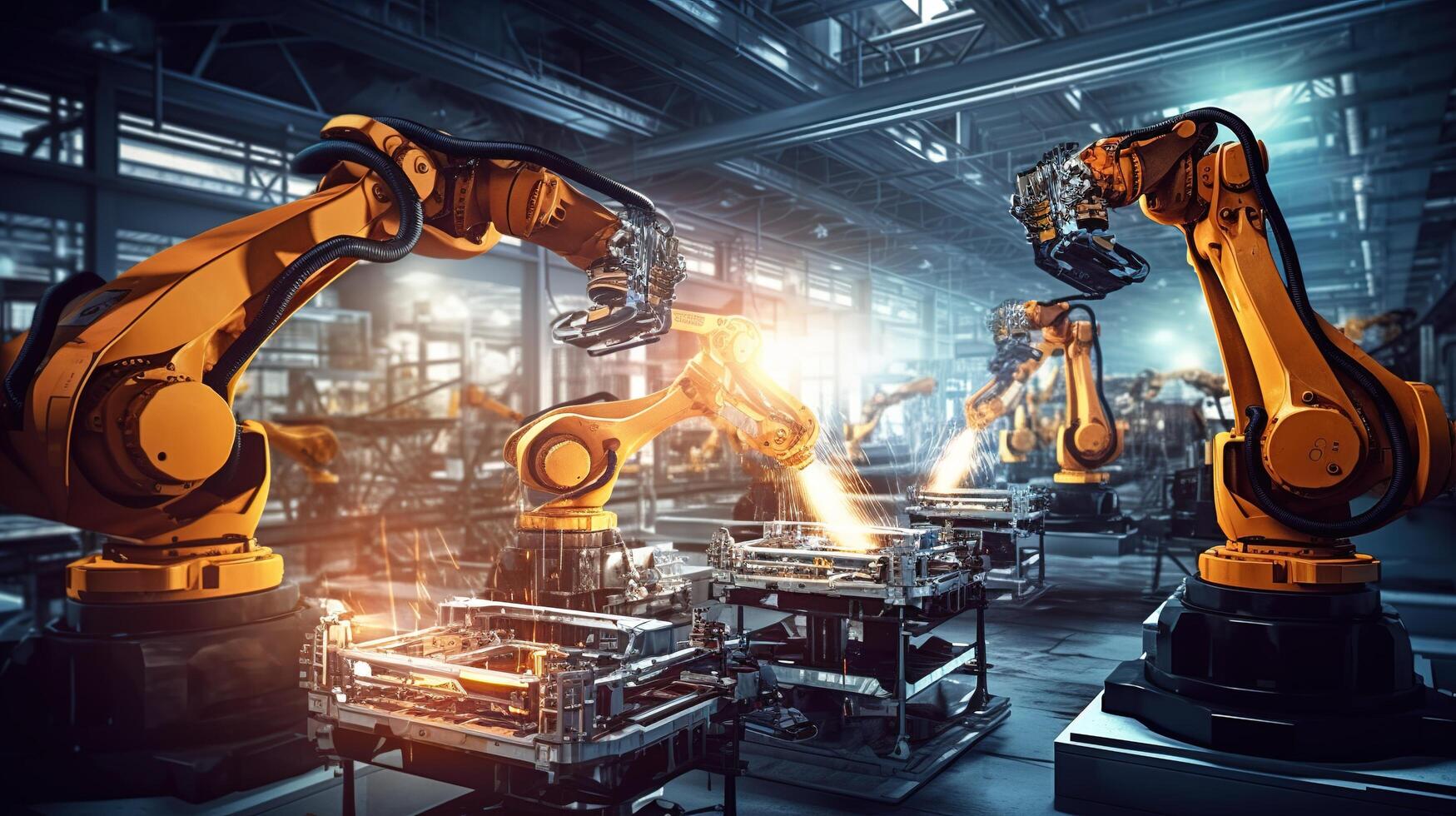
The modern manufacturing plant is undergoing a fundamental transformation. The traditional factory, characterized by linear assembly lines and reactive management, is evolving into a "smart factory." This new industrial model, also known as Industry 4.0, is an interconnected, data-driven, and intelligent ecosystem. The "power" that enables this intelligence—the brain behind the operation—is Artificial Intelligence (AI).
AI is the technology that converts the massive streams of data from factory-floor sensors into predictive insights, autonomous decisions, and optimized processes. It is what makes the factory "smart," enabling it to be more efficient, adaptive, and resilient.
Here are the key ways AI technology is powering today's smart factories.
1. The Predictive Core: AI-Driven Maintenance
The most significant operational shift in a smart factory is the move from reactive to predictive maintenance.
Traditional Model: Machines run until they break (reactive) or are serviced on a fixed schedule (preventive), which often means replacing parts that are still functional.
AI-Powered Model: Smart factories embed Internet of Things (IoT) sensors in critical machinery. These sensors stream real-time data on temperature, vibration, acoustics, and power consumption. An AI-powered machine learning model analyzes this constant data feed, learning the unique operational "heartbeat" of each machine. The AI can then detect subtle, almost invisible anomalies and patterns that signal an impending failure. This allows the factory to schedule maintenance precisely when needed, before the breakdown occurs, effectively eliminating unplanned downtime, reducing maintenance costs, and extending the lifespan of expensive equipment.
2. The All-Seeing Eye: AI in Quality Control
In a traditional factory, quality control is a manual, error-prone bottleneck, often relying on human inspectors to spot defects. The smart factory uses AI-powered computer vision to create an automated, infallible, and continuous inspection process.
High-speed, high-resolution cameras are installed along the production line, capturing images of every single product. An AI deep learning model, trained on millions of images, analyzes these products in real-time. It can identify microscopic defects—such as cracks, surface scratches, incorrect alignments, or flaws in welding—that are invisible to the human eye. This system operates 24/7 without fatigue, ensuring 100% of products are inspected. This not only guarantees a higher-quality product but also drastically reduces material waste and the costs associated with recalls.
3. The Adaptive Workforce: AI-Powered Robotics
The automation of the past involved "dumb" robots, caged off for safety, performing a single, repetitive task. AI has created the next evolution: collaborative robots, or "cobots."
These cobots are equipped with advanced sensors and AI-driven vision systems. This AI is what allows them to "see" and "understand" their environment, enabling them to work safely alongside human employees. They can be "trained" on new tasks quickly, often by a human simply guiding the robot's arm through the desired motion. AI allows these robots to be adaptive—they can pick up parts that are not perfectly aligned or adjust to variations on the fly. This creates a flexible production line that blends the best of human ingenuity and problem-solving with the precision and endurance of a machine.
4. The Virtual Proving Ground: The AI-Powered Digital Twin
One of the most powerful concepts in the smart factory is the "digital twin," a technology powered by AI. A digital twin is a perfect, real-time virtual replica of the entire factory, from its machinery to its workflows.
This virtual model is continuously fed live data from the physical factory's IoT sensors. The AI acts as the simulation engine, allowing managers to ask "what-if" questions and run complex scenarios in the virtual world with zero real-world risk. For example, a manager can test the impact of reconfiguring a production line, adding a new product, or changing a supplier. The AI will simulate the results, identify potential bottlenecks, and optimize the process before a single physical machine is moved, ensuring maximum efficiency and saving millions in potential trial-and-error costs.
5. The Integrated Ecosystem: AI in Process and Supply Chain Optimization
The smart factory does not operate in isolation. AI serves as the central nervous system that connects the factory's internal operations with the external supply chain. AI models analyze the factory's production schedule and cross-reference it with real-time demand forecasts, supplier availability, and logistics data. If a shipment of raw materials is delayed, the AI can automatically adjust the production schedule to compensate. Furthermore, AI models monitor the factory's total energy consumption, optimizing machine schedules to run energy-intensive processes during off-peak hours, significantly reducing operational costs and improving sustainability.
Today’s Smart Factories Powered by AI Technology
Cryptofor Team
•
September 28, 2025